

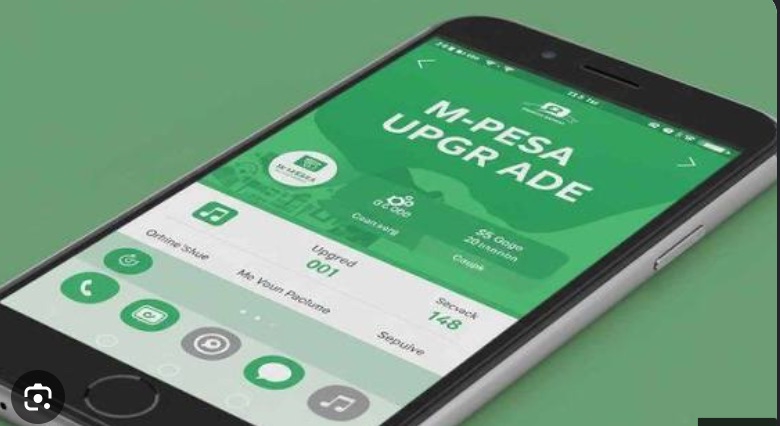
In 2007, a mobile network in Kenya launched a simple feature. You could text money to anyone with a phone number — no bank account needed. They called it M-Pesa. "M" for mobile. "Pesa" for money in Swahili.
Nobody expected what happened next.
Picture this: you live in a village in rural Kenya. The nearest bank is a 3-hour bus ride away. The bus costs money you don't have. The bank requires documents you've never had. So you keep your savings under your mattress, you borrow from loan sharks at 100% interest, and you pray nothing goes wrong.
That was the reality for hundreds of millions of people across Africa and Asia. Not because they were poor managers of money — but because the system was never built for them.
"Before M-Pesa, I had to send money home by putting cash in an envelope on a bus and hoping the driver didn't lose it."
— Small business owner in Nairobi
How It Actually Works
1 You deposit cash at a local agent
Think of it like a human ATM — a corner shop, a pharmacy, anyone registered as an M-Pesa agent. You hand them cash, they credit your phone wallet.
2 You text money anywhere instantly
Type a phone number, type an amount, send. The other person gets a text confirmation. Done in 10 seconds. Works on a $20 phone with no internet.
3 They withdraw cash at their local agent
The recipient walks to any agent near them and converts the digital money back to cash. No bank. No account. No ID required in most cases.
4Your transaction history becomes your credit score
This is where it gets interesting. Every transaction you make builds a digital footprint. And now, AI reads that footprint to decide if you qualify for a microloan — in minutes.
Then AI Happened
Here's the part most people don't know. M-Pesa launched a product called M-Shwari — a savings and loan product powered entirely by an AI that analyzes your M-Pesa transaction history.
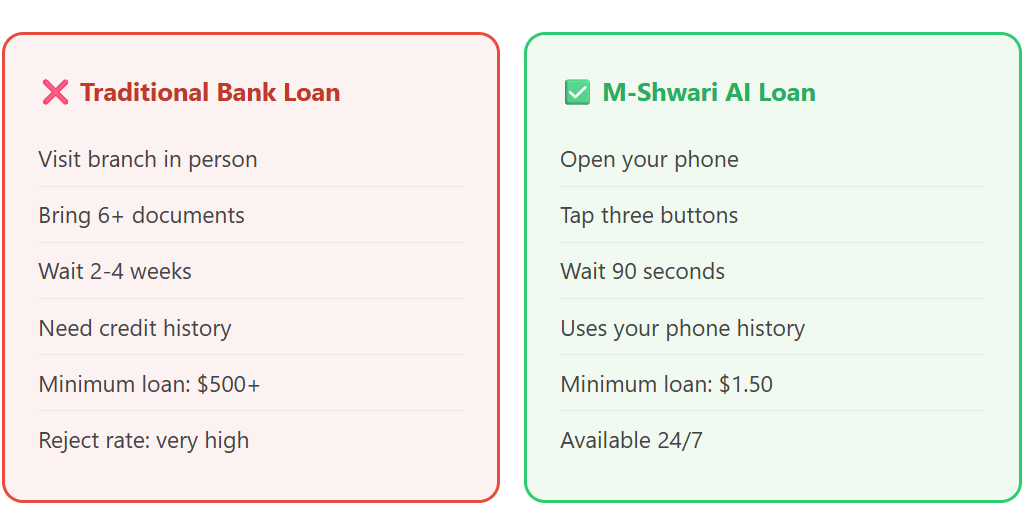
No paperwork. No bank visit. No human review. The AI looks at how often you send money, how consistent your income is, whether you pay bills on time, and makes a loan decision in 90 seconds.
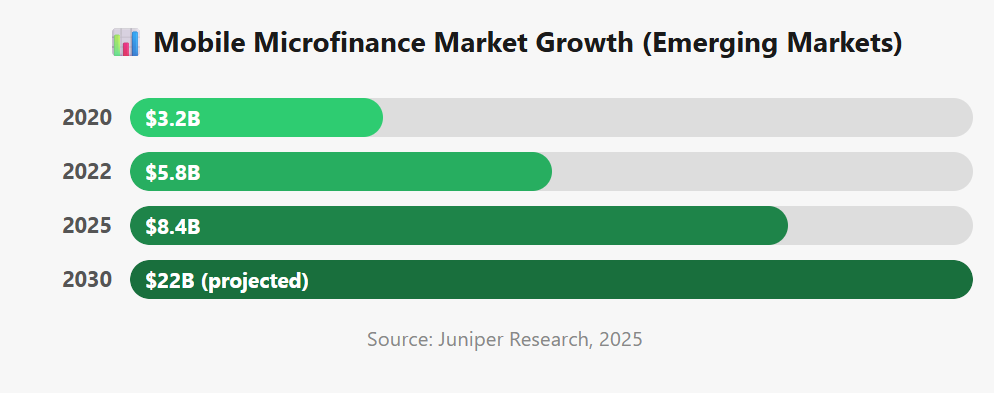
There are 1.7 billion adults on earth with no bank account. Most of them have a phone. That gap — between the banked and unbanked — is exactly what mobile microfinance is closing, one text message at a time.
In Bangladesh, a similar platform called bKash now has more users than the entire country's banking system combined. In India, the government's UPI system processed over 100 billion transactions in 2023 alone — most of them micro-payments under $5.
The wild part? AI loan models in Kenya are now outperforming traditional bank loan officers on repayment prediction. The machine doesn't care if you have collateral — it cares whether you paid your electricity bill on time for the last 6 months.
What's Next
The next frontier is embedded microfinance — loans that appear exactly when you need them, inside apps you already use. Imagine you're an Uber driver in Lagos. After 100 rides, your app offers you a $50 loan to repair your car — automatically, based on your earnings history, approved before you even finish reading the notification.
That's not science fiction. It's already being tested in Nigeria, Kenya, and Indonesia right now.
The phone didn't just replace the bank. It's building a smarter one.